Dignified End-Of-Life Care Is A Core Public Health Need

In an exclusive interview, Nadeem Anam, Associate Director, Medical Technology Association of India (MTaI) shared his valuable inputs on various aspects of end-of-life care.
Q1. How do you see the challenge of delivering dignified end-of-life care growing alongside India’s rapidly aging population?
As India ages, dignified end-of-life care is shifting from a niche concern to a core public health need. Today, more than10% of India’s population is aged 60 or above, roughly 149 million people as of 2022 and this number is projected to nearly double to 20.8% (about 347 million) by 2050. A nationally representative LASI-based study estimates that 12.2% of older adults in India have supportive and palliative care needs—roughly one in eight seniors who may require ongoing care. Yet India has only about four palliative-care centres per 10 million people, leaving most elderly with serious health-related suffering without timely support
Addressing this growing need will require three linked actions: expansion of palliative-care services, strengthening clinical capacity in geriatrics and palliative medicine, and ensuring wider availability of appropriate care and technologies at home and in communities. Global and local data both indicate that the demand is rising sharply, reinforcing the urgency of building a system capable of providing comfort, dignity, and continuity of care for seniors across India.
Q2. What are the distinct social, infrastructural, and policy challenges that come with this demographic shift, and how do you see technology shaping India’s response?
Social structures are evolving rapidly. As nuclear-family living becomes more common and migration for work increases, traditional support systems are weakening, leaving many older adults without reliable caregivers. Meanwhile, in most districts, palliative-care services, community nursing, and home-care pathways remain severely limited. Although policy frameworks are in place, implementation varies widely, and issues such as uneven geographic distribution, limited opioid analgesic availability and lack of reimbursement mechanisms continue to undermine continuity of care. Technology is not a substitute for compassion, but it can strengthen the capacity of clinicians and families to carefor older adults. Digital health tools such as remote monitoring and tele consultation (for example via platforms similar to eSanjeevani) can keep clinicians connected with patients at home, easing follow-up and support. At community level, portable oxygen systems, infusion devices, mobility aids, pressure-management equipment, and home-nursing coordination via digital platforms can reduce distress and prevent avoidable complications. When thoughtfully integrated, these technologies can extend clinical expertise beyond hospitals making quality care more accessible and affordable across communities.
Q3. What categories of medical devices and assistive technologies are most crucial to ensuring “living with dignity”, “dignified mobility” and “dying with dignity”? What innovations are making a difference today?
Three broad categories shape dignified end-of-life care are:
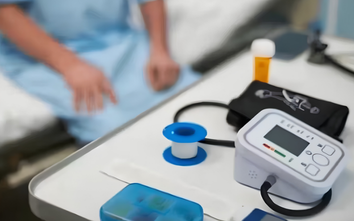
Comfort and symptom relief. Devices such as controlled analgesia pumps, portable oxygen delivery systems, enteral feeding tools, bedside commodes, raised toilet seats, urinals/bedpans and stoma/ostomy care kits help manage pain, breathlessness, nutrition and provide toileting and hygiene support with greater predictability and less distress. Their value lies in stabilizing symptoms and reducing avoidable hospital visits. Indeed, a systematic review of home-based palliative care (HBPC) covering ~92,000 patients found that HBPC consistently reduced hospital visits, hospital stays, and overall health-care costs.
Mobility, transfers, and pressure-injury prevention. Adjustable home-care beds, transfer aids, pressure-relief surfaces, and simple positioning devices protect skin integrity, reduce caregiver strain, and uphold dignity during lifting of patient, routine care particularly valuable for bed-bound or immobile older adults. Home-based care generally improves quality of life and reduces complications associated with prolonged hospitalization.
Monitoring and communication tools. Remote vital-sign monitoring, fall detection, and telemedicine platforms allow clinicians to intervene early while keeping families informed and reassured. For example, a recent study of a remote-patient–monitoring platform reported high user satisfaction among patients and caregivers and demonstrated feasibility of continuous support during the last year of life.Telehealth-supported home oxygen therapy for COPD patients has been associated with significant reductions in hospital readmissions.
Given rising palliative needs and an ageing population globally (and in India), these data reinforce the urgent need for scalable home- and community-based models of care that combine compassionate support with modern technology, enabling comfort, dignity, and continuity for seniors.
Q4. As more Indian families prefer “care at home,” what physiological, psychological, and logistical needs must medical devices address? How can innovators adapt technologies to India’s diverse caregiving reality?
Home care devices must be safe, reliable, and easy to use for non-clinical caregivers. Physiologically, they should address common challenges among older adults which are breathlessness, pain, mobility limitations, pressure-injury risk, swallowing difficulties, and multiple medication needs. In India, about 12.2% of older adults are estimated to have supportive or palliative care needs.
Psychologically, devices should reduce anxiety through clear displays, simple alerts, and reliable communication pathways with clinicians. Logistically, they need to be compact, energy-efficient, and serviceable in smaller towns where power supply and space constraints are common. Indeed, reviews of smart home health technologies note frequent barriers when devices are bulky, need stable connectivity, or are ill-suited to typical home layouts. For India’s diverse socio-economic realities, innovators should design for low-literacy and multilingual use. Pictorial guides, local-language prompts, and simplified controls are crucial. Evidence supports that pictograms significantly improve medication adherence and reduce dosing errors among caregivers with limited health literacy.
Affordability must be built into both design and delivery. Tiered models at different price points, rental options, and modular maintenance can help families with access, an approach already gaining ground in India’s home-healthcare equipment market.
Partnerships with community health workers and pilot programmes in Tier 2 and Tier 3 towns can help tailor products to local needs and strengthen adoption. A recent report showed that home-based care in India, combining remote monitoring, periodic nurse visits, and community support reduced readmissions by 40% and shortened hospital stays.
By aligning design and deployment with these data-informed imperatives, home-care devices can become safer, more usable, and more equitable, improving quality of life for older adults across India.
Q5. What lessons can India draw from countries like Japan or European nations where medical technology has transformed elder and end-of-life care? What regulatory or policy gaps hinder similar progress here, especially outside major metros?
Countries such as Japan and those in Europe have invested in systems that integrate home monitoring, community nursing, and coordinated primary care. In Japan, for instance, the “smart home-healthcare” market- including assistive technologies and robotics that support mobility, social engagement, and safety- is rapidly expanding, reflecting widespread institutional and home-based investment. In Europe, national eHealth platforms link home monitoring to primary-care teams, reducing hospitalisation and improving continuity of care. These systems advance quickly because reimbursement models, standards for home-use devices, and large-scale workforce training reinforce each other.
In India, progress has been slower due to by uneven implementation of national palliative-care strategies and limited reimbursement pathways for home-use MedTech. Despite a population of over 1.4 billion, the country reportedly has just 4 palliative-care centres for every 10 million people, severely constraining access outside metro regions. Service networks remain patchy outside major cities: most home-care providers and palliative services are concentrated in a few states, while many rural and Tier 2/3 areas lack any coverage. There is also a persistent shortage of trained caregivers and specialists; national data points to major staffing gaps in community-level health infrastructure.
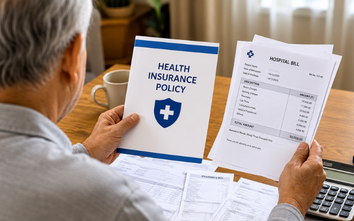
These constraints disproportionately affect areas where home care is the default option. Addressing them requires clear regulatory guidance for home-use devices, stronger supply and service ecosystems, and incentive mechanisms that make essential technologies more accessible — for example, through rental schemes, subsidies, or inclusion under insurance coverage.
Q6. How can the medical technology industry collaborate more effectively with policymakers, clinical societies, and healthcare providers to create standards and guidelines for compassionate end-of-life care? What role can MTaI play?
A humane end-of-life ecosystem will emerge only when technology, clinical practice, and policy evolve in alignment. MTaI can help bring these elements together in three practical ways.
First, MTaI can work alongside organisations such as the Indian Association of Palliative Care, the Indian Academy of Geriatrics, and other clinical bodies to develop standardised protocols for home-based and hospice settings. Clear guidance on the use of infusion devices, oxygen systems, pressure management tools, and safe opioid administration would help ensure consistent levels of safety and comfort across regions.
Second, MTaI can support evidence-to-policy alignment by helping the government identify priority MedTechcategories for geriatric and palliative care. Integrating these into national programmes such as National Programme for Prevention and Control of Cancer, Diabetes, Cardiovascular Diseases and Stroke (NPCDCS), Ayushman Bharat - Pradhan Mantri Jan Arogya Yojana (AB-PMJAY) home-care packages, and state-level elderly/palliative-care missions would strengthen pricing transparency, procurement, and reimbursement. For context, AB-PMJAY currently provides a defined benefit cover of ₹5 lakh per family per year for secondary and tertiary care covering over 55 crore beneficiaries nationwide. Meanwhile, NPCDCS already anticipates inclusion of home-based and palliative-care under its service package at PHC/CHC level.
Third, MTaI can help design pilot projects where MedTech companies, public hospitals, NGOs, and home-care providers jointly test workable care models. These can include remote monitoring for terminal patients, technology-enabled home nursing, rental-based access to high-quality devices, and community training initiatives. Data from such pilots can directly inform national standards and guidelines for palliative care under existing health-system architectures such as NPCDCS and AB-PMJAY.
The goal is to ensure that compassionate care and regulatory clarity progress together- so that technology reliably supports dignity and comfort at the end of life, rather than ending up as fragmented or inconsistent service delivery.
Q7. Training is critical for ethical and effective use of advanced medical devices. What steps are needed to integrate end-of-life and geriatric care training across the health system? How can caregivers at home be empowered?
Training must operate at several levels. Undergraduate and postgraduate medical education should include structured modules in geriatric medicine and palliative care, supported by rotations in community-based programmes. In fact, Indian Nursing Council (INC) added in 2022 a mandatory 20-hour palliative-care module in the 4th semester of the BSc Nursing curriculum, demonstrating institutional recognition of this need. Similarly, some institutions such as Yenepoya Medical College offer a six-month hybrid certificate course combining geriatric care + palliative medicine, a model MTaI could review for adaptation at scale.
Nursing and paramedical curricula need strong focus on device competency, communication skills, and symptom management. Simulation labs, accredited certificate programmes, and refresher courses (for instance the 19.5-hour advanced nursing palliative-care course by Pallium India) already show that practical training can be delivered efficiently.
For home caregivers, mobile-first microlearning modules, local-language videos, and resource guides can help build basic capability. Community workshops through primary health centres, tele-support services, and simplified device interfaces reduce anxiety and improve safety. For example, trainings for caregivers are being offered by clinical institutions such as Dr. B. Borooah Cancer Institute (BBCI, Guwahati) — covering wound care, mobility support, communication, and basic home care — illustrating feasibility of caregiver-targeted skills development.
Quick-start guides for caregivers, and local technician networks, can strengthen confidence in device use and care procedures. Over time, certification and formal recognition of trained caregivers will help expand the workforce and improve quality of care nationwide.