Respiratory Illnesses in India: Clean Air and Preparedness Matter
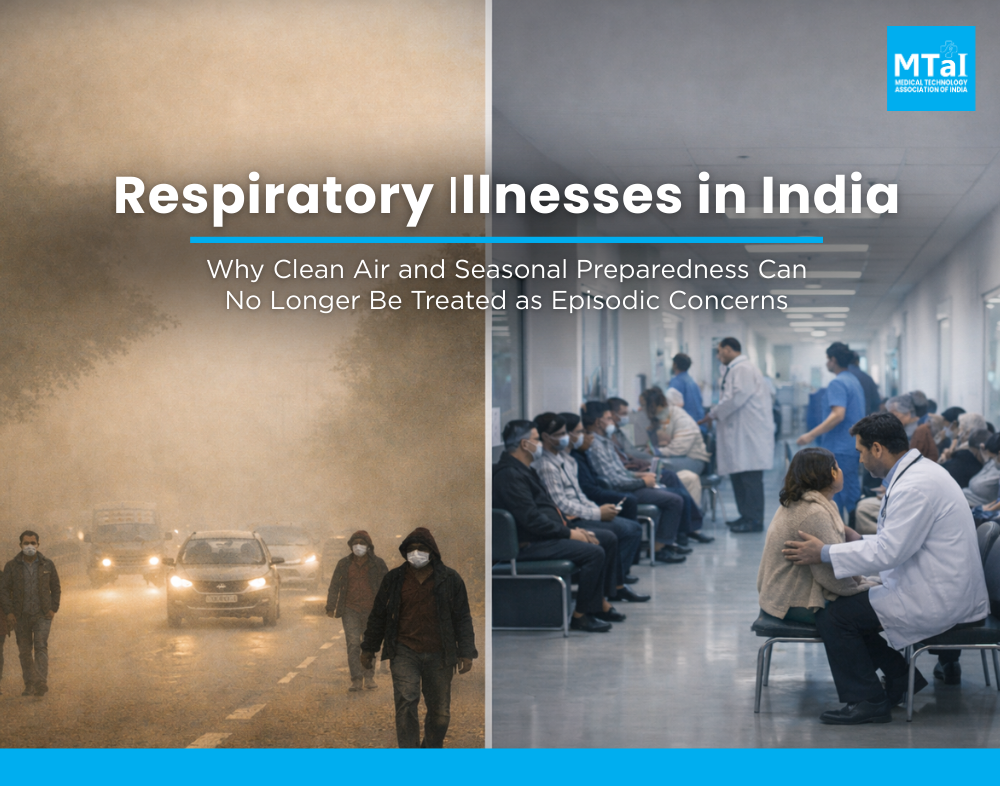
India’s festive calendar increasingly coincides with a parallel and persistent season of hazardous air quality. Each winter, large parts of northern India experience prolonged periods of severe pollution, driven by a familiar convergence of crop-residue burning, vehicular emissions, industrial activity, and unfavourable meteorology. Emergency responses, school closures, construction bans, and traffic curbs have become routine rather than exceptional.
The implications extend well beyond temporary disruption.This normalisation of extreme air pollution is reshaping India’s respiratory health landscape, amplifying infections, worsening chronic disease, overwhelming hospitals, and creating economic and productivity losses. Respiratory Illness in India is no longer a short-term seasonal phenomenon;. It is a predictable, recurring systems challenge, one that demands preparedness rather than reaction.
Encouragingly, the same period has also seen rapid advances in medical technology, digital health infrastructure, and policy recognition of clean air as a public good. The opportunity now lies in connecting these strands into a coherent strategy for respiratory resilience.
Air Pollution: A Public-Health Emergency, Not an Environmental Footnote
Air pollution in India is often framed primarily as an environmental concern: visibility, emissions targets, and climate commitments. Its health implications, however, are far more consequential. Recent global estimates attribute roughly two million deaths annually in India to air-pollution-related diseases, the majority linked not to acute infections but to chronic non-communicable conditions such as cardiovascular disease, lung cancer, and chronic respiratory disorders.
This burden is also unevenly distributed. Urban populations face extreme outdoor pollution, while many rural households experience sustained indoor exposure due to biomass-fuel use for cooking and heating. Despite progress in clean-cooking initiatives,women and children continue to bear a disproportionate share of this exposure. For a large segment of the population, harmful particulate exposure is continuous rather than episodic.
The economic implications mirror the health toll. Lost productivity, healthcare costs, and premature mortality together impose a substantial drag on national growth. Clean air, therefore, is not merely an environmental aspiration; it is an economic and health imperative.
When Polluted Air Meets Vulnerable Lungs
The human respiratory tract is equipped with sophisticated defence mechanisms. The mucociliary escalator, with microscopic cilia moving mucus upwards, forms the first barrier against inhaled pathogens. Fine particulate matter, especially PM2.5 and smaller, disrupts this defence at multiple levels. It damages ciliated cells, alters mucus production, weakens epithelial barriers, and dampens immune signalling.
Emerging evidence suggests an even more concerning interaction: airborne particles can act as carriers for respiratory viruses, enabling them to penetrate deeper into the lungs and intensify disease severity. This dual effect of pollution, both weakening defences and facilitating infection, helps explain why respiratory illnesses are more frequent and more severe during high-pollution periods.
In such conditions, infections that might otherwise remain mild can escalate rapidly, particularly among children, the elderly, and those with underlying respiratory or cardiovascular disease.
A Healthcare System Under Recurrent Strain
The convergence of pollution and seasonal infections places sustained pressure on India’s healthcare system. Public hospitals routinely report winter surges in acute respiratory cases, with admissions rising sharply during high-pollution periods. Chronic respiratory diseases further compound this burden.
India accounts for a disproportionate share of the global disability burden from chronic obstructive pulmonary disease. Yet early detection remains limited. Spirometry and pulmonary-function testing are underutilised, particularly outside tertiary centres, leading to delayed diagnosis and avoidable exacerbations.
These patterns reveal a system that remains largely reactive, mobilising resources after disease severity peaks rather than anticipating predictable demand.
MedTech as an Enabler of Respiratory Resilience
Medical technology offers a credible pathway to shift from crisis response to preparedness across the respiratory care continuum.
Early and accessible diagnostics
Portable spirometers, peak-flow meters, and rapid respiratory pathogen tests can enable earlier detection of asthma, COPD, and seasonal infections at the primary-care level. Early identification reduces disease progression, transmission, and avoidable hospitalisation.
Continuous monitoring beyond clinic walls
Wearables, pulse oximeters, and smart inhalers allow clinicians to track patients between visits, identify early deterioration, and personalise therapy. For rural and remote populations, connected devices combined with telehealth bridge access gaps without requiring frequent travel.
Oxygen and critical-care readiness
Seasonal surges repeatedly expose vulnerabilities in oxygen supply chains. Investments in portable concentrators, resilient logistics, and digital oxygen-monitoring systems are essential to prevent avoidable mortality during predictable peaks.
Data-driven anticipation
Integrating air-quality data with health surveillance systems can enable forecasting of respiratory-disease surges. Such models allow health systems to prepare capacity, deploy diagnostics, and initiate preventive measures before hospitals are overwhelmed.
Technology alone, however, cannot offset continued exposure at the household level. Clean-cooking solutions and ventilation improvements remain among the most effective respiratory interventions available.
Policy Pathways: From Intent to Impact
Building respiratory resilience requires alignment across policy, healthcare, and innovation.
- Sustained air-quality action: National targets to reduce particulate pollution must be supported by enforcement, interstate coordination, and explicit linkage to health outcomes.
- Clean air as a public right: Judicial recognition of clean air as a fundamental right strengthens accountability, but durable impact depends on consistent implementation.
- Primary-care integration: Digital health initiatives provide a platform to embed respiratory diagnostics, monitoring, and follow-up into routine care.
- Responsible innovation: Clear regulatory pathways for AI-enabled diagnostics, secure data systems, and accessible financing are critical to scale adoption safely.
- Cross-sector collaboration: Policymakers, clinicians, industry, and researchers must work together to ensure solutions reach underserved populations, not only urban centres.
Toward a Future of Respiratory Resilience
Respiratory illness in India is neither inevitable nor unmanageable. It is the predictable outcome of environmental exposure, seasonal variability, and systemic gaps, and therefore is amenable to prevention.
Cleaner air will deliver immediate health dividends. Early diagnostics and monitoring can reduce avoidable hospitalisations. Data-driven preparedness will replace crisis management with anticipation. Creating clean air as a shared societal responsibility aligns public health, economic productivity and environmental stewardship.
India now faces a strategic choice: continue to respond episodically to respiratory crises, or build a system designed for resilience. The decisions made today will determine whether polluted winters remain a recurring emergency or become a challenge the country has decisively learned to manage.